
The iPhone 13 has taken the smartphone world by storm, but a burning question lingers: does it really need a SIM card? Picture this: you’ve just unboxed your shiny new device, and you’re ready to dive into the latest apps and features. But wait! Do you need that little plastic card to unleash its full potential?
In a world where technology evolves faster than a cat meme goes viral, understanding the SIM card situation can save you from unnecessary headaches. Whether you’re a tech-savvy guru or a casual user, knowing how the iPhone 13 handles connectivity could be the key to your mobile bliss. So, let’s unravel this mystery and find out if that SIM card is your new best friend or just an optional sidekick in your digital adventure.
Overview of iPhone 13
The iPhone 13 features a sleek design with a durable Ceramic Shield front cover. It comes in various colors, appealing to different aesthetic preferences. Equipped with Apple’s A15 Bionic chip, this model ensures robust performance and energy efficiency. The device hosts a dual-camera system, allowing for high-quality photography and advanced video capabilities.
Connectivity options for the iPhone 13 include 5G support, enhancing browsing speed and streaming quality. Users can enjoy improvements in battery life, which lasts up to 19 hours during video playback. The availability of both eSIM and physical SIM card slots provides flexibility for users regarding carrier options.
In terms of storage, the iPhone 13 starts with 128GB, accommodating various user needs. Enhanced cinematic modes and improved low-light performance characterize the camera features, attracting photography enthusiasts. Apple’s focus on environmental sustainability is notable, as the iPhone 13 incorporates recycled materials in its construction.
For accessing Apple services, including iCloud and Apple Music, having a SIM card plays a critical role. Users seeking to maximize mobile connectivity find that using a SIM card facilitates seamless communication and internet access. Overall, the iPhone 13 delivers a comprehensive package of design, functionality, and connectivity options tailored to modern users.
SIM Card Basics
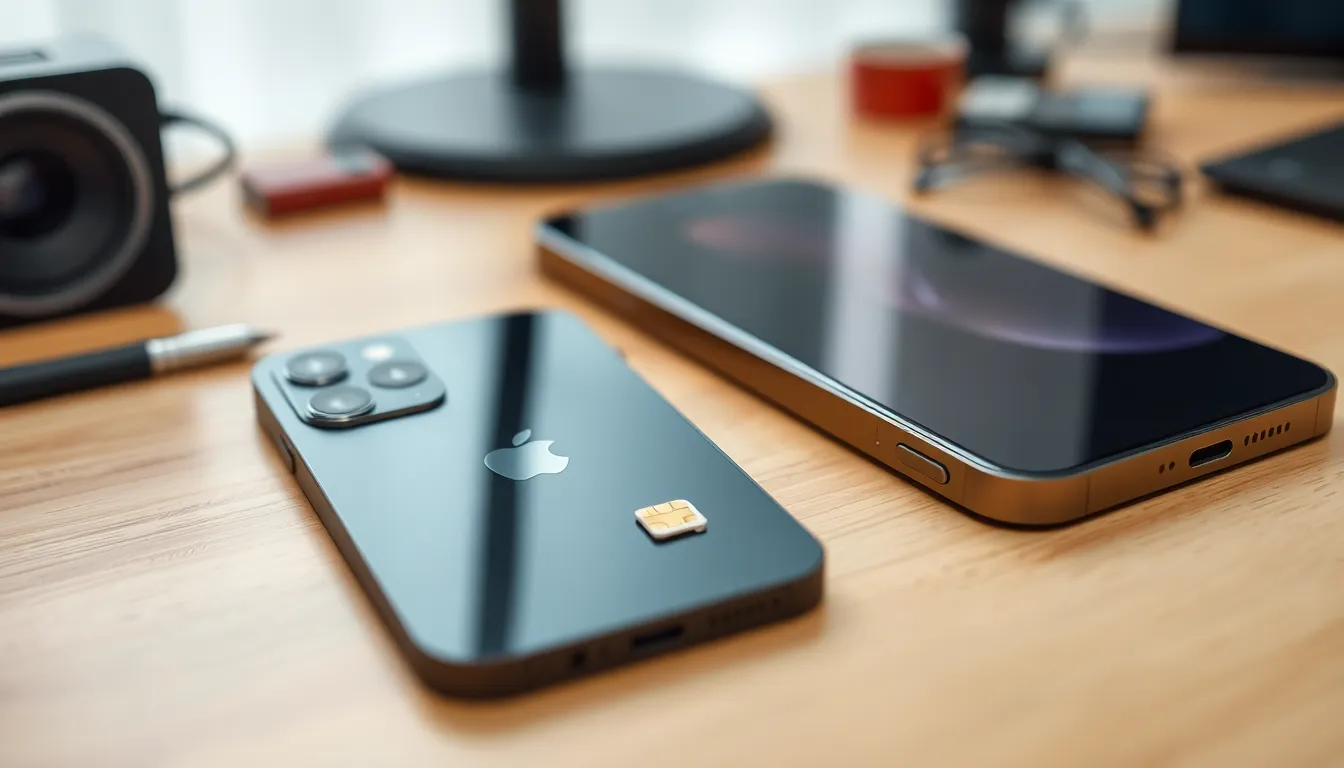
Understanding SIM cards is essential for maximizing the iPhone 13’s functionality and connectivity. These components play a pivotal role in how the device interacts with mobile networks.
What Is a SIM Card?
A SIM card holds a unique identifier that connects a mobile device to a carrier’s network. This card enables users to make calls, send messages, and access mobile data. Without a SIM card, fundamental features like voice communication and internet browsing become unavailable. Users can also store contacts and other data on the SIM, providing convenience for switching devices. A SIM card essentially bridges the device and the mobile network, ensuring seamless operation.
Types of SIM Cards
Various SIM card types cater to different devices and user needs. Standard SIMs are often used in older mobile phones, while micro SIMs fit newer models. The iPhone 13 incorporates a nano SIM slot, the smallest SIM card type, providing more compact designs. eSIM technology further enhances flexibility, allowing users to activate a cellular plan without a physical card. This option is especially beneficial for frequent travelers or those using multiple carriers. Understanding these types ensures users select the ideal SIM for their device and preferences.
iPhone 13 and SIM Card Compatibility
iPhone 13 supports multiple SIM options, enhancing connectivity for users. Understanding the differences between physical and eSIM functionality is essential.
Physical SIM Slot
iPhone 13 includes a nano SIM slot, accommodating traditional SIM cards from various carriers. Users insert the SIM card to access mobile networks effectively. Connectivity enables calls, text messaging, and mobile data, making the device functional on the go. The SIM slot ensures compatibility with most global carriers. Users can physically change or swap SIM cards based on travel or service needs, providing flexibility.
eSIM Functionality
eSIM technology offers a modern alternative to traditional SIM cards, allowing built-in cellular plans. Users can activate a digital SIM without needing a physical card, streamlining setup and changes. For travelers, eSIMs simplify switching between carriers without swapping physical cards. iPhone 13 supports multiple eSIMs, making it easier to manage plans from different providers. Overall, eSIM functionality enhances user experience by providing seamless connectivity options.
Using iPhone 13 Without a SIM Card
The iPhone 13 can function without a SIM card by utilizing Wi-Fi for connectivity. Many features remain accessible when connected to a Wi-Fi network, allowing users to browse the internet, stream content, and access apps. Wi-Fi calling is also an option, enabling voice calls over Wi-Fi instead of traditional cellular networks. Users can download software updates and replace cellular data usage when connected to a reliable Wi-Fi network.
Accessing features without cellular service on the iPhone 13 is straightforward. Users can still enjoy Wi-Fi messaging apps, like WhatsApp and iMessage, while engaging with social media platforms. Additionally, features such as photos, videos, and music remain available through pre-installed applications and stored content. Activities like gaming, browsing, and utilizing GPS functions rely solely on available Wi-Fi networks. Overall, a SIM card isn’t required for basic operations and enjoyment of the iPhone 13 when Wi-Fi is utilized.
The iPhone 13 offers impressive versatility in connectivity options. While a SIM card is essential for accessing mobile networks and enjoying full functionality on the go, users can still make the most of their device through Wi-Fi. This flexibility allows for seamless communication and internet access without being tied to a traditional SIM card. Whether opting for a physical nano SIM or embracing eSIM technology, users can tailor their experience to meet their needs. Ultimately, the iPhone 13 stands out as a powerful device that accommodates various connectivity preferences, making it a great choice for both casual users and tech enthusiasts alike.